Destinations
Croatia — Islands, Stone Walls, and After-Dark Romance
From Hvar’s sun-washed harbor to Dubrovnik’s fortress walls, Croatia offers romance shaped by sea, stone, and late nights.
Croatia, in Stone and Sea
Croatia is not immediate.
It reveals itself gradually — stone by stone, harbor by harbor — along the Adriatic.
From Split to Hvar to Dubrovnik, the Dalmatian coast unfolds in a sequence of walled cities, crystalline water, and islands that feel suspended in time. The romance here is not theatrical. It is textural — cobblestone underfoot, salt on skin, fortress walls glowing at sunset.
For couples traveling together — even with children woven into the rhythm of ferry crossings and sunlit afternoons — Croatia offers a balance of energy and retreat.
Split: A Beginning in Stone
Split is anchored by history.
At its center stands Diocletian’s Palace — not a preserved monument, but a living city built directly into ancient Roman walls. Cafés spill into courtyards where emperors once walked. Boutiques occupy former stone chambers.
The beauty of Split is its density. You can wander for hours without leaving the old city, losing yourself in narrow passages that open unexpectedly onto sea views.
It is an ideal entry point — vibrant but compact.
Hvar: Lavender and Light
From Split, the coast gives way to island rhythm.
Hvar is all lavender air and white stone, with boats clustered in the harbor and water so clear it feels unreal. The town hums with energy at night, but by day it is relaxed, sunlit, almost languid.
At the waterfront Adriana Hotel, terraces overlook the harbor, and the rooftop pool provides a quieter perch above the movement below. Suites open toward the sea, offering enough privacy to retreat from the island’s social pulse when needed.
The real romance of Hvar is found not in its nightlife but in its scale. The island is small enough to feel intimate — a short walk from one end of the harbor to the other, a swim just steps from your room.
Days are built around water. Evenings drift between seafood restaurants and slow walks along the port.
Dubrovnik: Fortress and Horizon
If Hvar is light, Dubrovnik is drama.
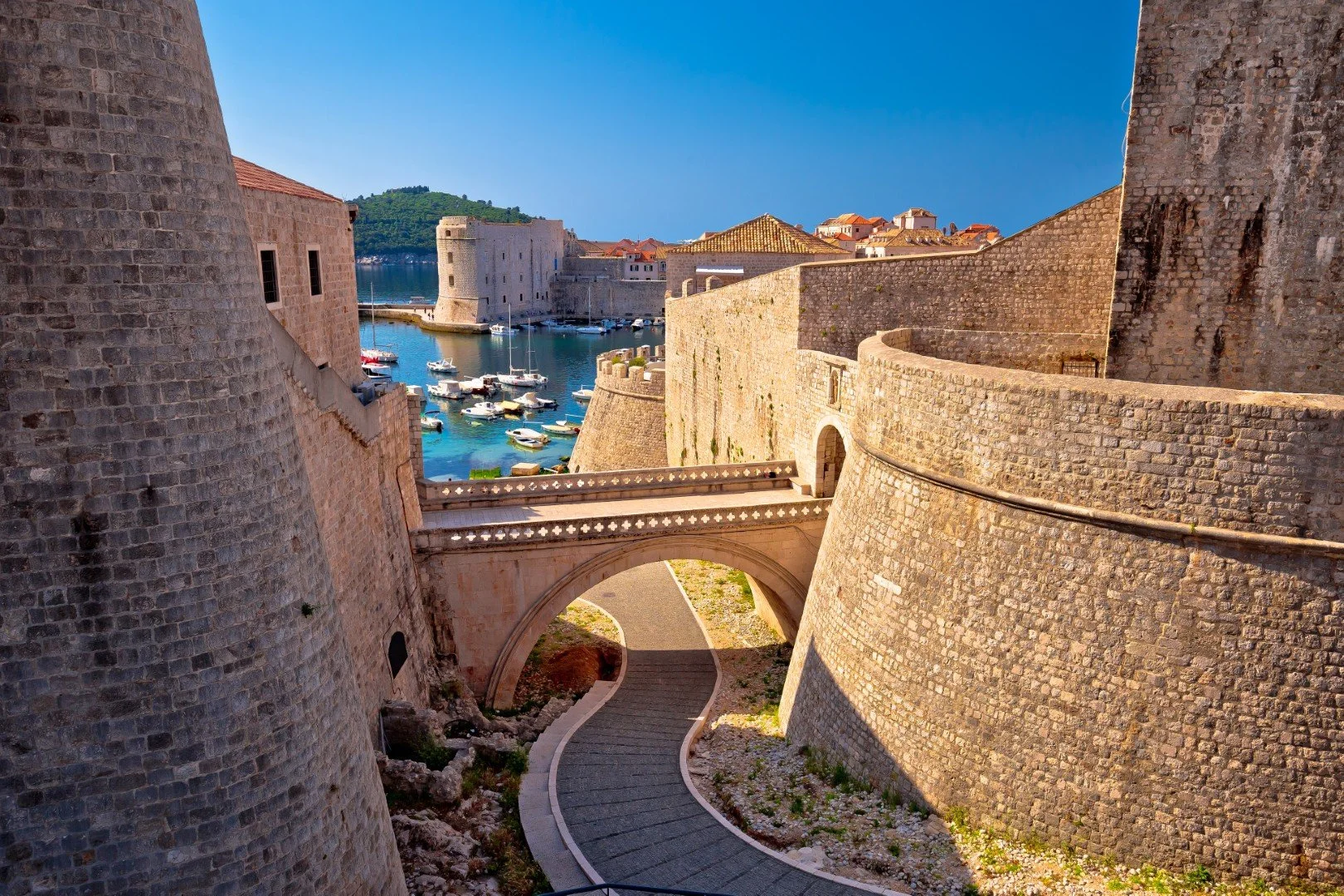
Encased within massive stone walls, the city feels almost mythic. The Adriatic presses against its edges; rooftops glow terracotta against deep blue sea.
Staying just beyond the old city walls offers perspective. At Rixos Premium Dubrovnik, perched on a cliff above the water, modern interiors contrast with the medieval city below. Balconies frame uninterrupted sea views; the spa leans into Turkish ritual and steam.
Walking the ancient city walls at dusk reveals the full scale of Dubrovnik’s beauty — stone meeting sea, history meeting horizon.
A short boat ride to Lokrum Island shifts the mood entirely. Pine forests, roaming peacocks, rocky swimming spots carved into the coastline. The Adriatic is clearest here, impossibly turquoise against dark stone.
The Adriatic Effect
What lingers about Croatia is its balance.
Energy and quiet. Stone and sea. History and sunlight.
Children race along fortress paths; parents pause to take in the view. Ferry crossings become part of the narrative rather than mere transport. The coastline stretches endlessly, but each town feels contained.
Croatia does not overwhelm with spectacle.
It invites immersion.
And somewhere between Split’s palace walls and Dubrovnik’s ramparts, romance settles naturally into place.
Marrakech and Fes — Romance Within the Medina Walls
From Marrakech’s lantern-lit riads to Fes’s hidden courtyards, Morocco offers intimacy behind ancient walls.
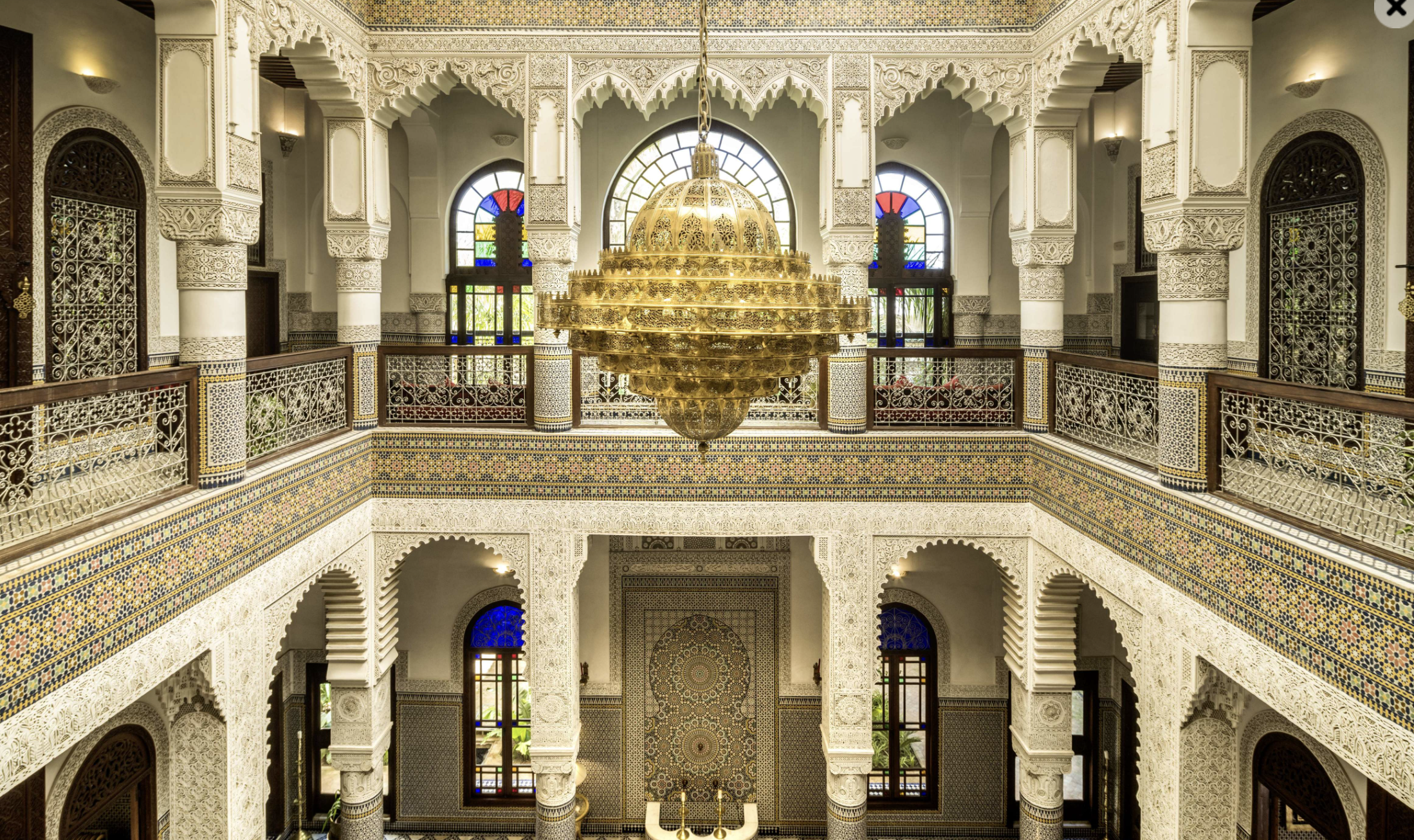
Morocco for Two
Morocco heightens everything.
Color feels more saturated. Music lingers longer in the air. Even the act of walking becomes theatrical — the Medina unfolding in narrow passages, tiled courtyards hidden behind carved wooden doors, the scent of orange blossom and spice drifting through warm dusk.
Marrakesh is not subtle. It hums. It dazzles. And yet, within that intensity, it offers intimacy.
For couples traveling together — even with children woven into the rhythm of the days — Morocco invites a different kind of connection. One rooted in contrast: chaos and quiet, heat and cool stone, spectacle and stillness.
Inside the Medina
At first glance, Marrakesh can feel overwhelming. The Medina pulses with motion — motorbikes weaving through alleyways, merchants arranging ceramics in improbable stacks, the call to prayer echoing overhead.
But step inside a riad and the world changes.
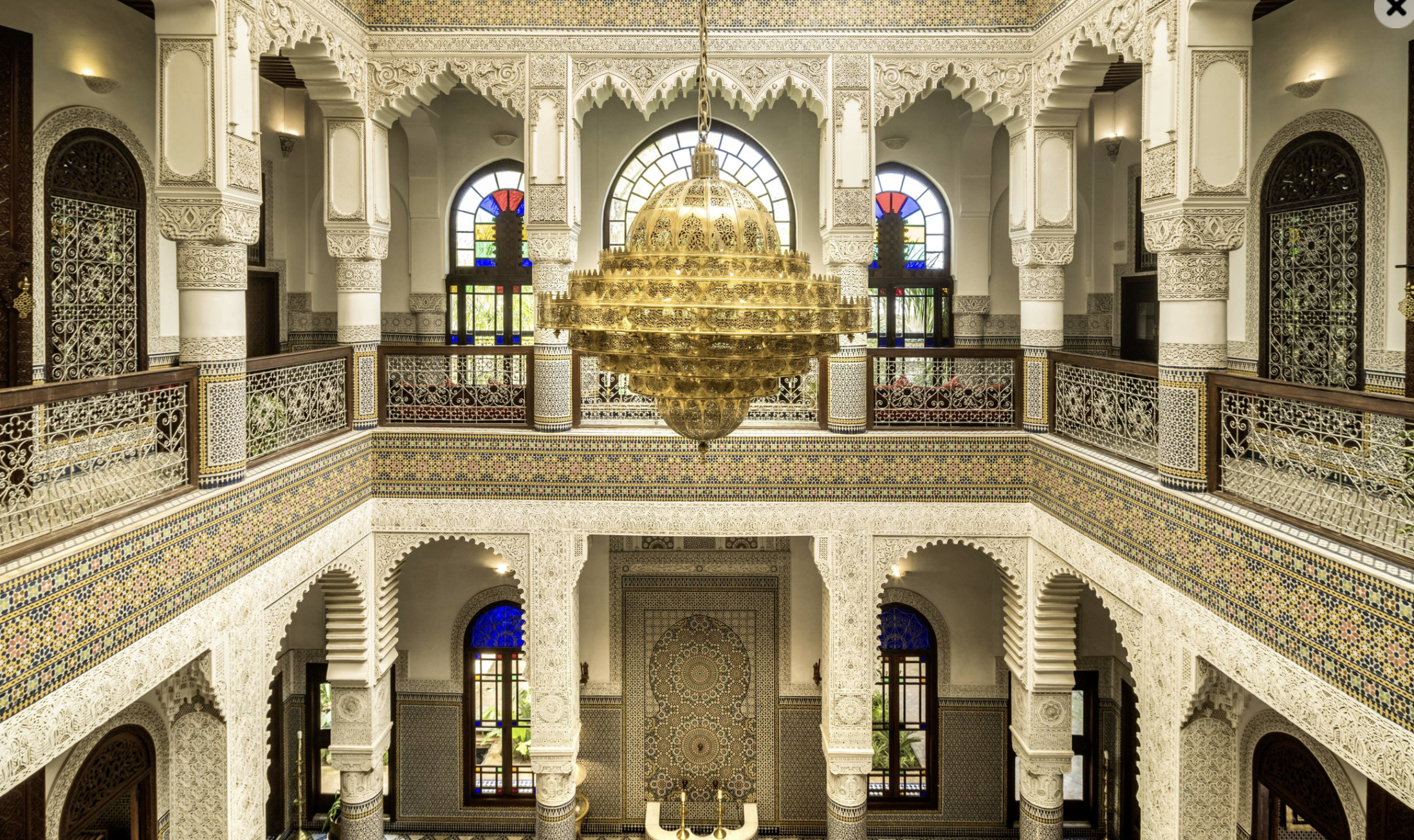
At the Royal Mansour, commissioned by King Mohammed VI, privacy becomes architectural. Each guest stays inside a private riad rather than a traditional hotel room — multi-level sanctuaries with hidden courtyards, carved plasterwork, and rooftop terraces that feel suspended above the city.
There is something undeniably romantic about a place designed for discretion. Breakfast arrives quietly. Tea is poured with ceremony. The outside world fades into patterned tile and filtered light.
For families, this layout offers an unexpected gift: separation without distance. Children can rest downstairs while parents linger on a terrace above. Travel does not have to mean constant proximity; it can mean curated space.
Rituals of the Day
Mornings in Marrakesh begin slowly.
At Le Jardin within the Royal Mansour, tea is poured theatrically from silver pots held high above delicate glasses. Moroccan breakfasts stretch across the table — fresh breads, honey, olives, preserved lemons, eggs scented with cumin. It is less about indulgence and more about ceremony.
Outside the walls of the city, the landscape shifts quickly.
In the Palmeraie, camels move deliberately through dusty groves, the horizon flat and endless. It’s easy to dismiss the ritual as tourist-driven, but there is something grounding about the pace — the sway, the silence, the vastness beyond the city’s hum.
Traveling as a family often means shared novelty. In Morocco, even simple activities feel cinematic enough to be remembered long after.
Evenings in Marrakesh
As dusk settles, Marrakesh softens.
Lanterns glow. Courtyards fill with low music. Restaurants become stage sets.
At La Grande Table Marocaine, traditional Moroccan cuisine is elevated without losing its depth. Tagines arrive fragrant and layered; couscous is delicate rather than heavy. Meals here are not rushed. They unfold.
Elsewhere, smaller dining rooms feel more intimate. Candlelight, tiled floors, carved ceilings — Morocco understands atmosphere instinctively.
Even for couples traveling with children, evenings offer reprieve. A shared dessert. A glass of wine. The luxury of conversation uninterrupted by daylight demands.
Fes: A Different Tempo
From Marrakesh, the road to Fes winds north through landscape that feels both cinematic and remote.
Fes is quieter, more inward-facing. Its Medina is labyrinthine and ancient, intimidating at first but mesmerizing once inside.
At Riad Fes, a Relais & Châteaux property tucked within the walls, velvet textures and tiled courtyards create a mood that feels almost operatic. Rooftop views stretch across the old city. The pace slows.
The most memorable ritual here was a couples’ hammam at Palais Faraj — steam, water, rhythmic motion, the feeling of emerging both grounded and weightless. Morocco has a way of turning ordinary experiences into shared rites.
Later, dinner beneath the stars on a rooftop terrace felt almost unnecessary to describe. The city shimmered below. The call to prayer drifted across rooftops. There are moments when travel feels less like movement and more like immersion.
Morocco offers many of them.
Greek Isles- Where family and romance meet
From Crete’s crystalline waters to Santorini’s cliffside hush and Mykonos after dark, the Greek Isles invite couples to rediscover rhythm, beauty, and each other.
The Greek Isles aren’t discovered — they’re revealed.
Light shifts by the hour: cobalt water in the morning, blinding white stone at midday, and rose-gold cliffs at dusk. The beauty is undeniable, but what makes Greece unforgettable is something quieter — its pace.
As I moved through Santorini, and Mykonos and Crete with my family, I was struck by how naturally the days unfolded. Even with children woven into the rhythm, there was space — for stillness, for connection, for those fleeting, romantic moments that can be harder to find at home.
Sun, sea, simplicity. The formula rarely fails.
Santorini felt cinematic — and intensely romantic
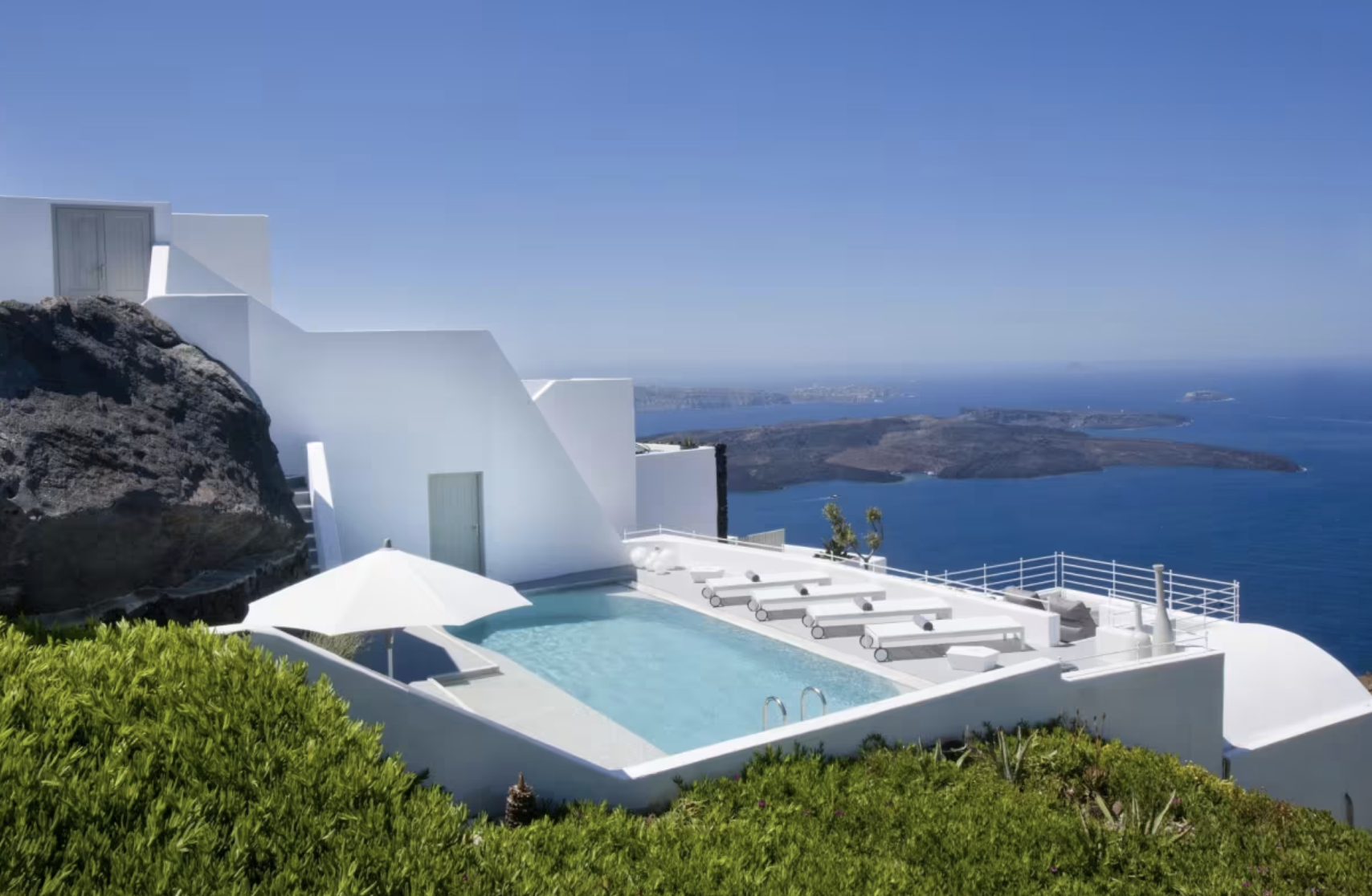
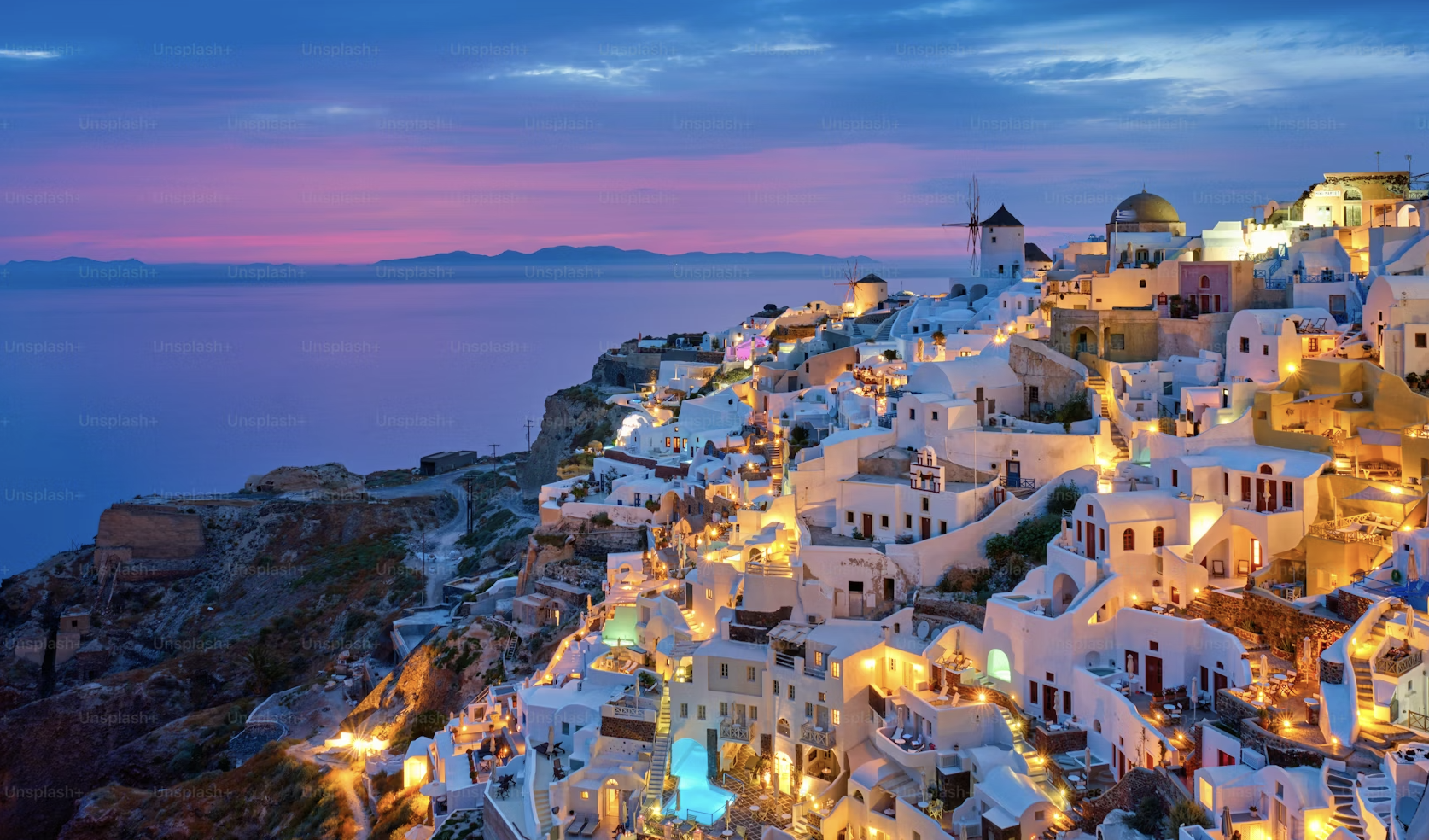
Santorini is effervescent, beautiful like you would see on the big screen.
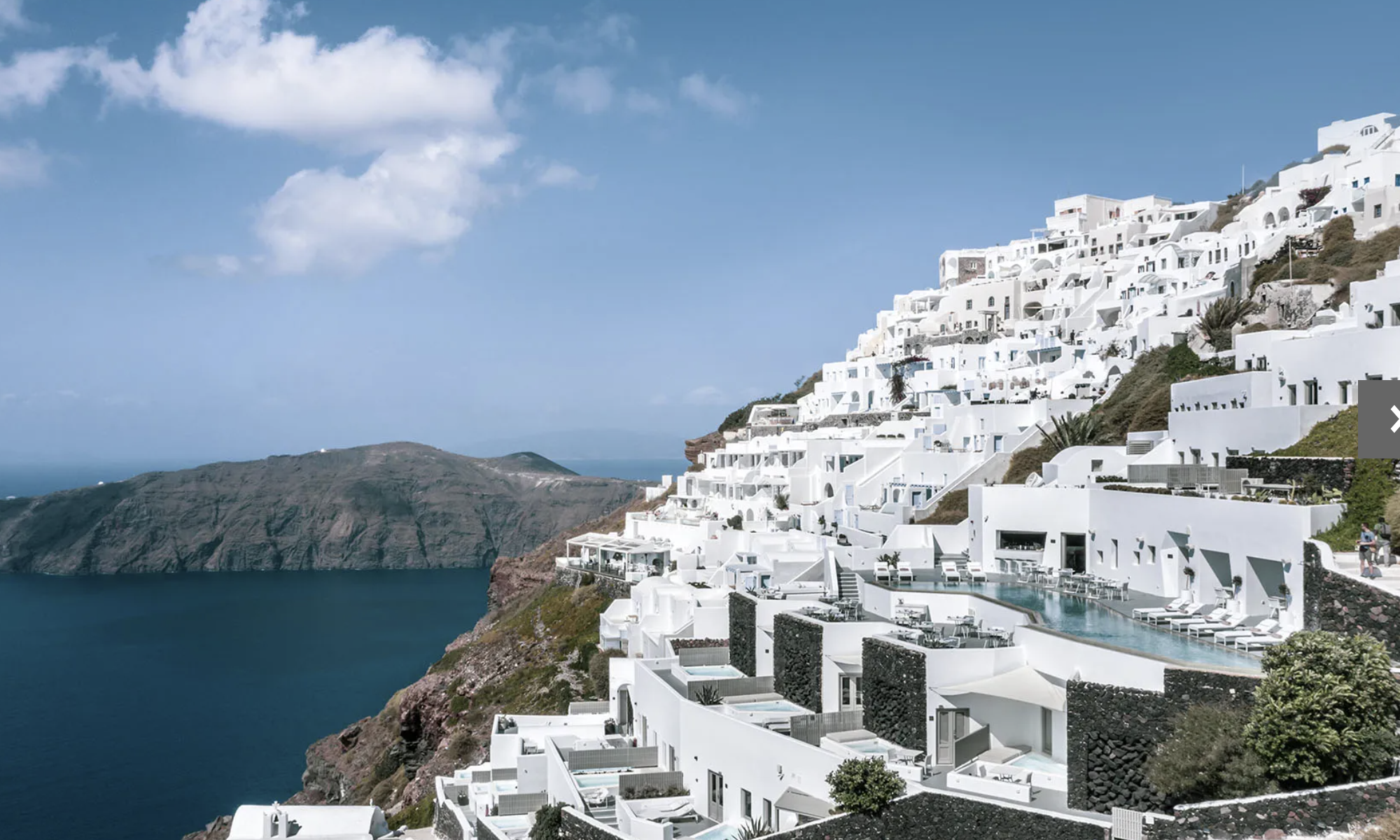
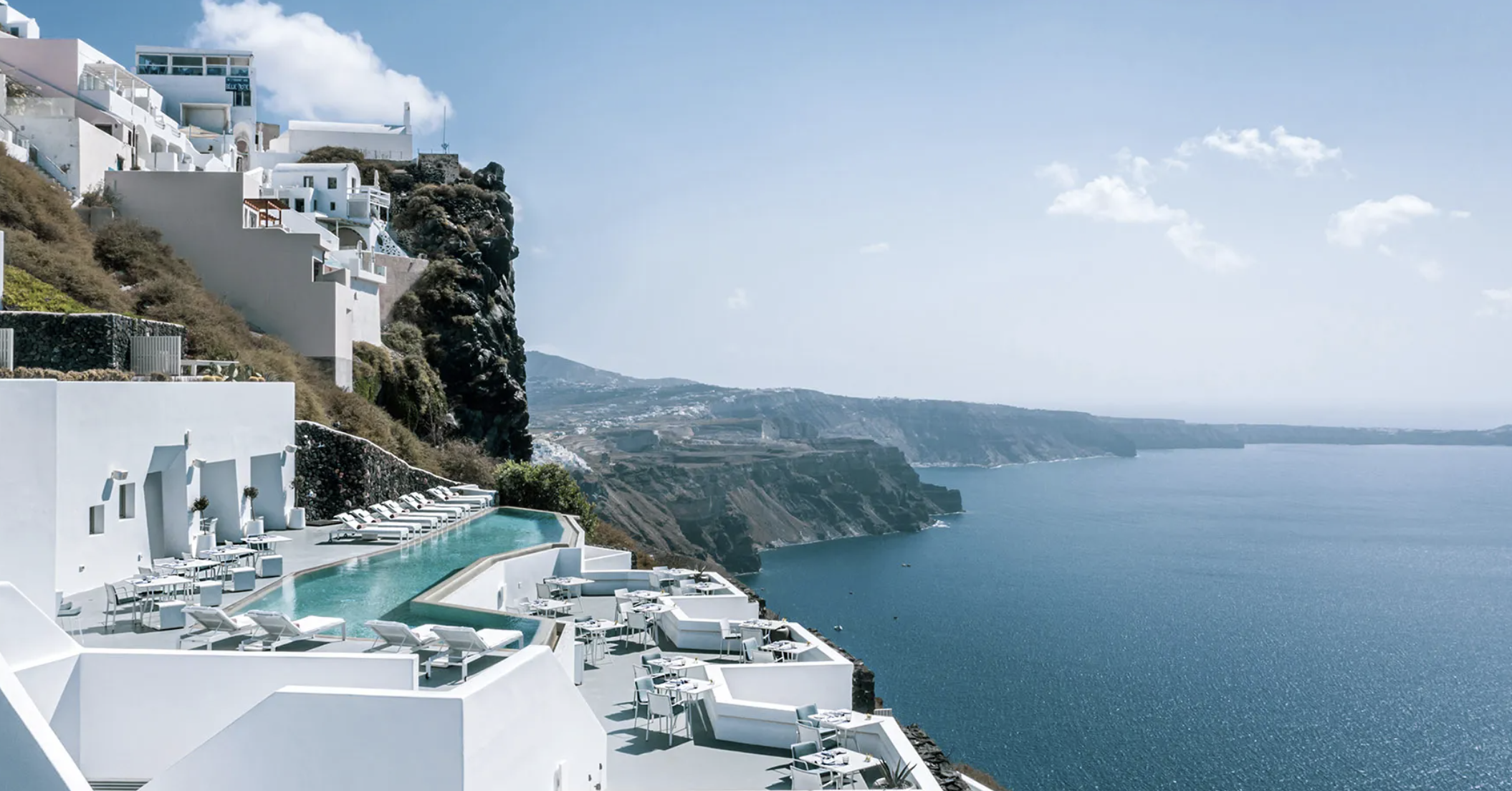
At Grace Hotel Santorini, perched high in Imerovigli above the caldera, the world feels suspended between sea and sky. The views are uninterrupted, stretching endlessly across the Aegean, shifting in color as the light changes throughout the day.
Our room opened directly onto a private plunge pool, where we would sit in the water as the sun began to set, watching the sky shift from bright blue to soft pink and then to deep indigo. It’s the kind of setting that encourages stillness — not because you have to, but because you want to.
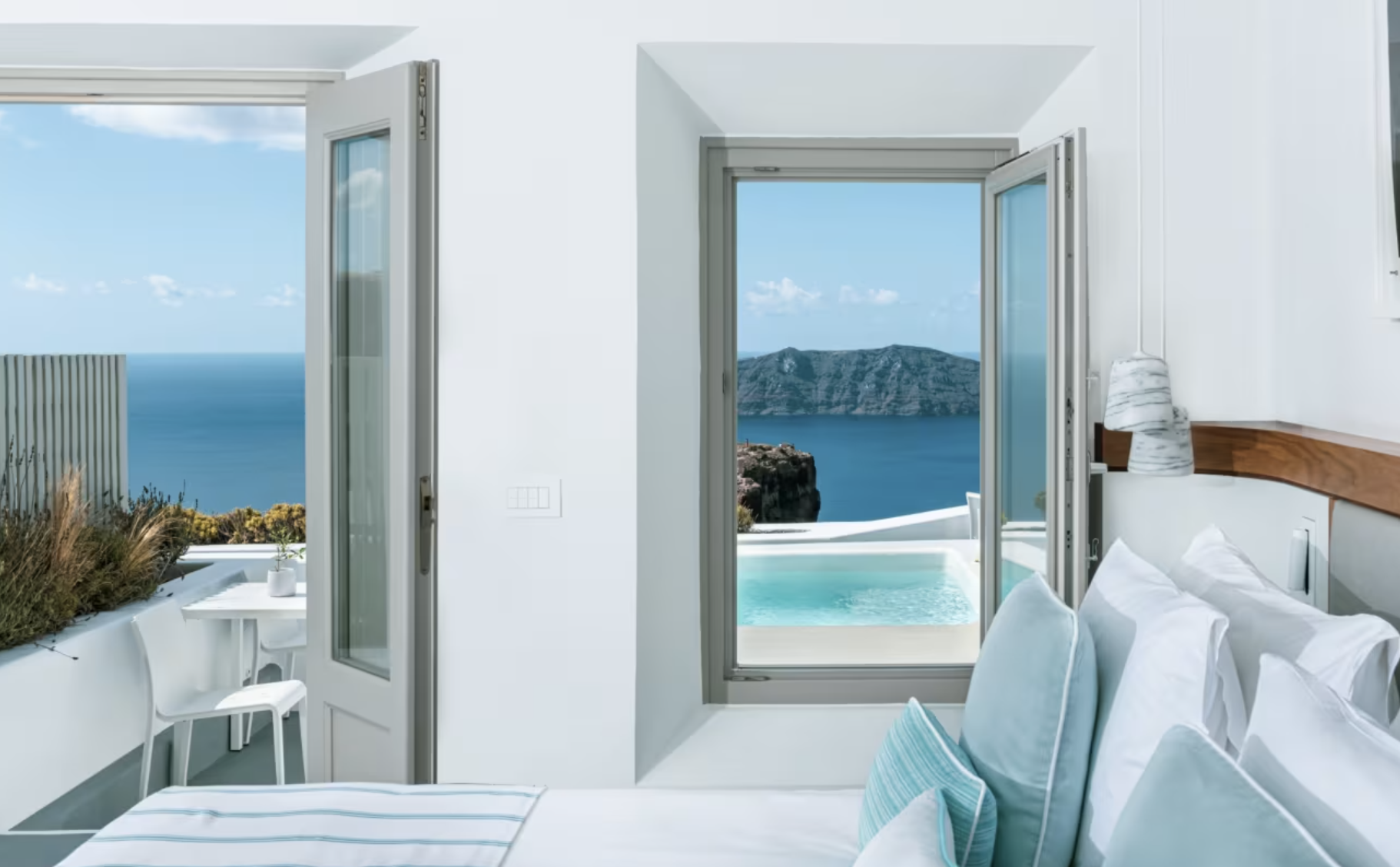
Rooms are designed to draw you outward — terraces that open fully to the horizon, and interiors that remain intentionally minimal so nothing competes with the view. Time slows here, shaped more by light than by schedule.
For couples, the experience feels inherently intimate — mornings that begin quietly, afternoons spent between sun and water, and evenings that unfold slowly. The hotel’s terrace becomes its own kind of destination, where dinners stretch late under the stars, the caldera just beyond, the air still warm well into the night.
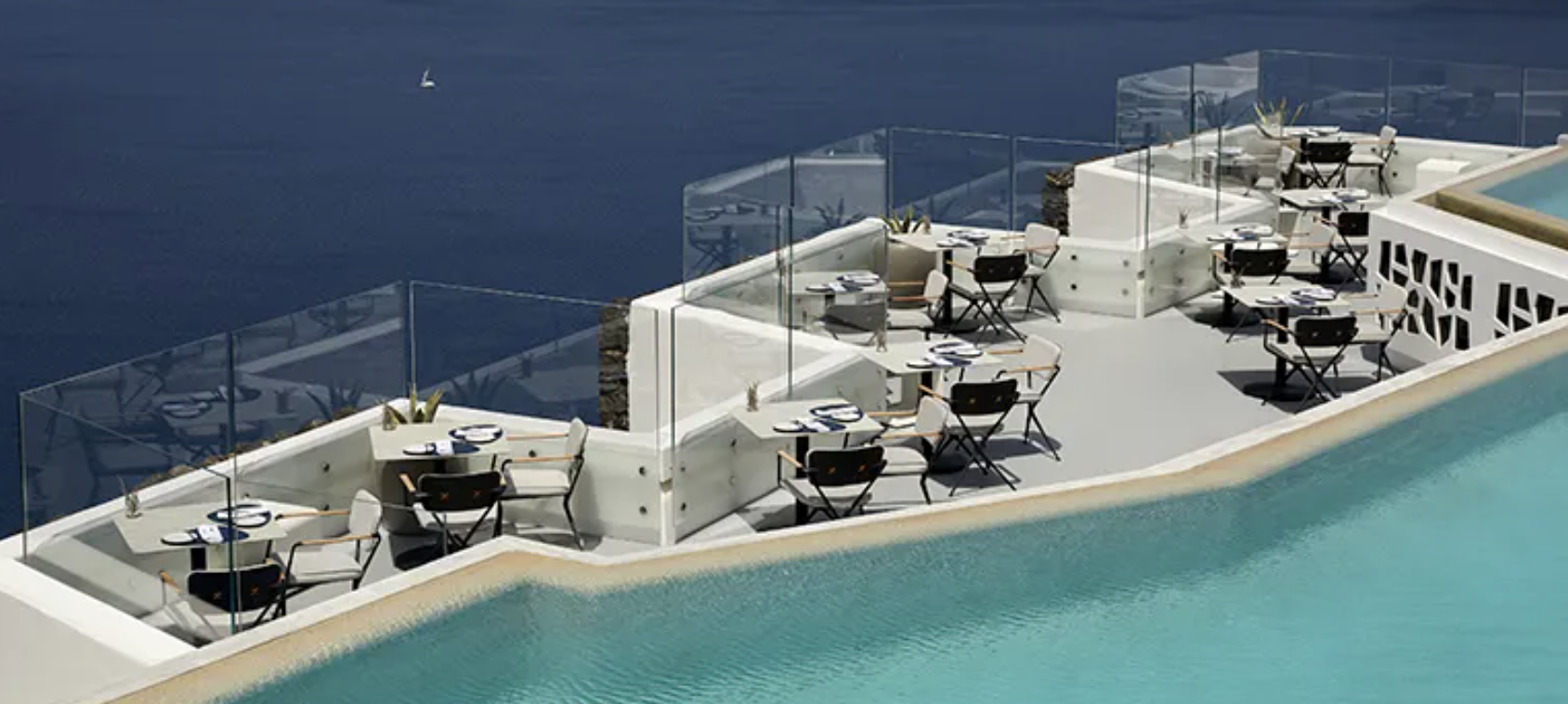
The island invites wandering. Narrow paths curve along the cliffs, where whitewashed buildings feel almost unreal in their perfection. Sunsets draw crowds, but even within the spectacle, there are moments of intimacy — a shared glance, a quiet corner, a table perched above the water.
Mykonos balanced energy with moments of calm
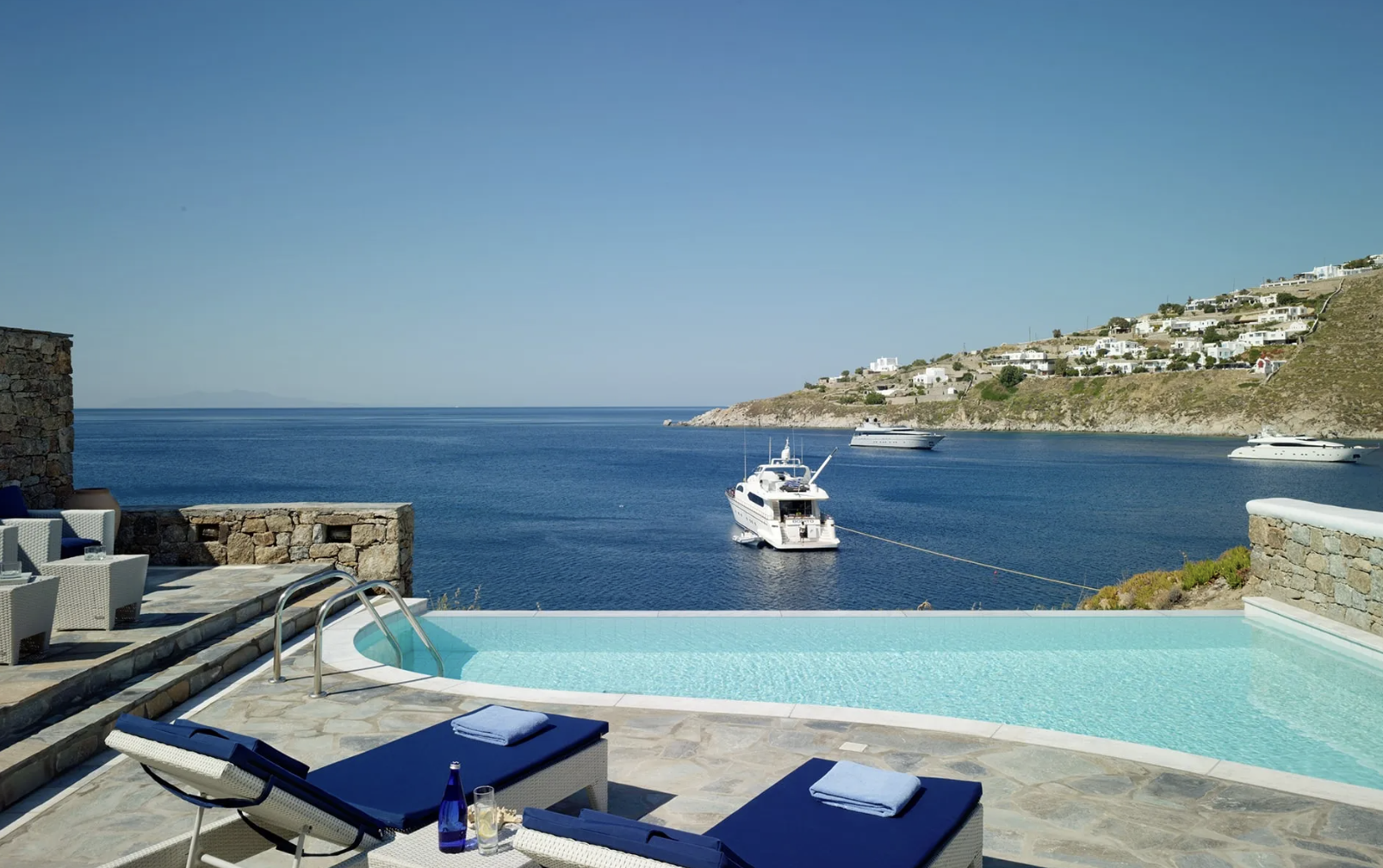
If Santorini is theatrical, then Mykonos is electric.
Mykonos introduces contrast.
The island hums with energy — polished boutiques, beach clubs, music drifting across the harbor. But just beyond the center, there’s space to step back.
At Petasos Beach Resort & Spa, set between two beaches, the atmosphere is bright, open, and easy. We stayed in a private room with its own pool overlooking the sea — a setting that made it just as appealing to stay in as it was to explore the island.
Rooms and suites feel modern and sunlit, many with terraces overlooking the water, while the pool becomes a natural gathering point — lively during the day, softer as evening approaches.
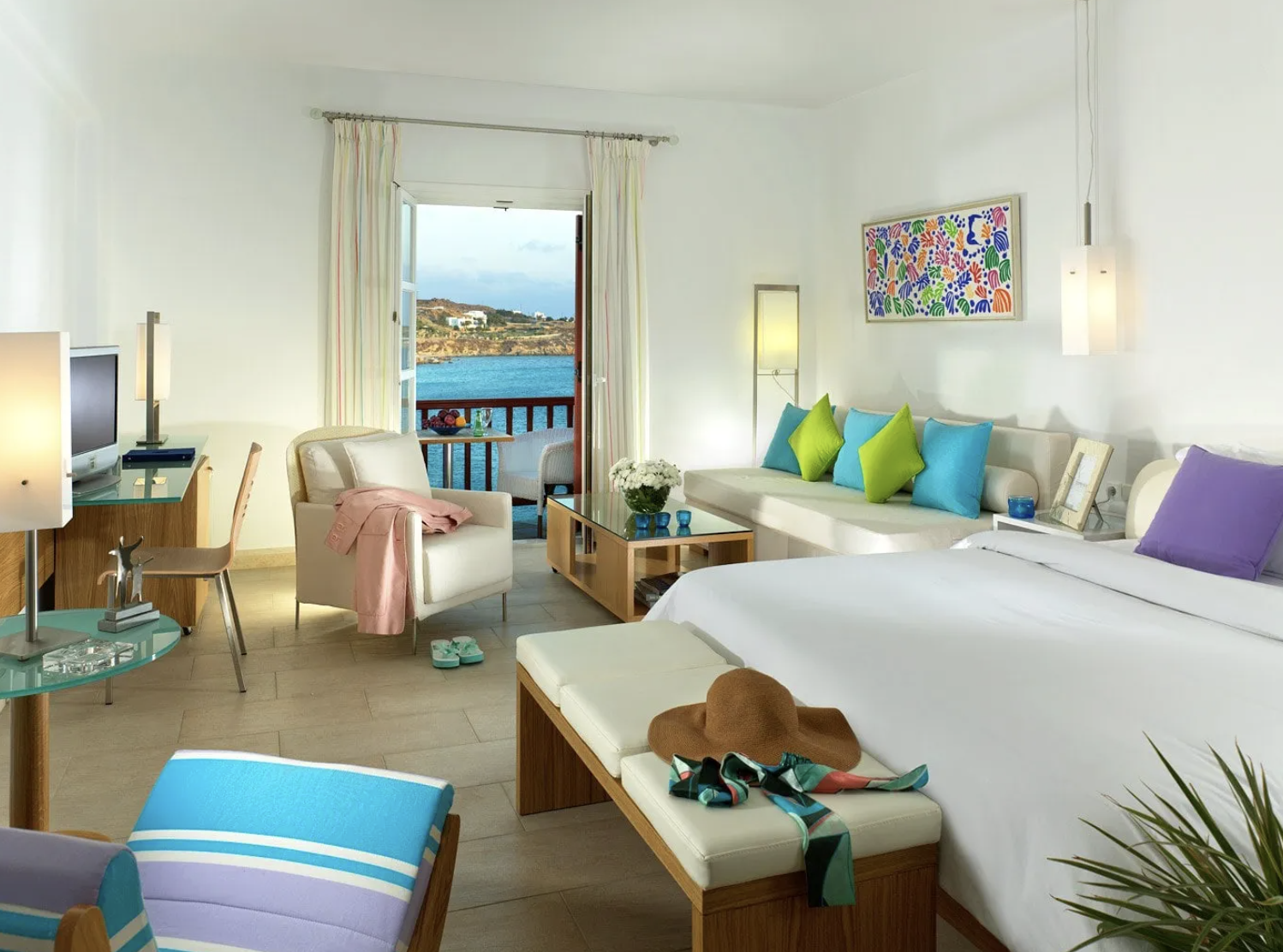
It’s a place that works well for both families and couples. Days can be social and active, or slow and quiet, depending on your mood.
Mornings begin with strong coffee and open views. Afternoons dissolve into saltwater swims. And by evening, the pace softens.
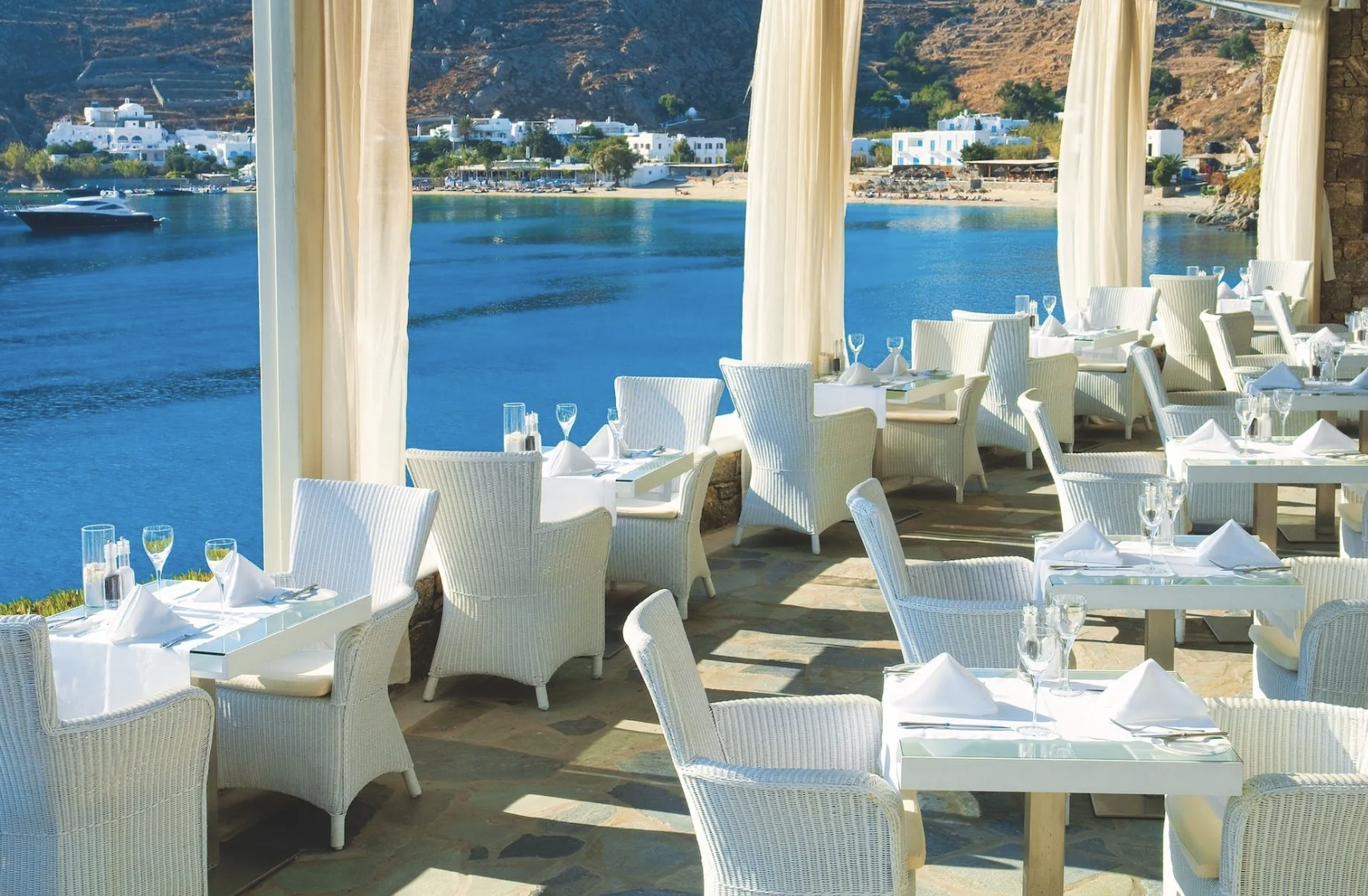
In town, whitewashed streets twist toward the famous windmills, glowing as sunset approaches. Restaurants spill toward the water, and meals stretch late into the night.
Mykonos reminded me that romance doesn’t have to be quiet — it can be vibrant, layered, and full of life.
Crete offered a slower, more grounded kind of romance
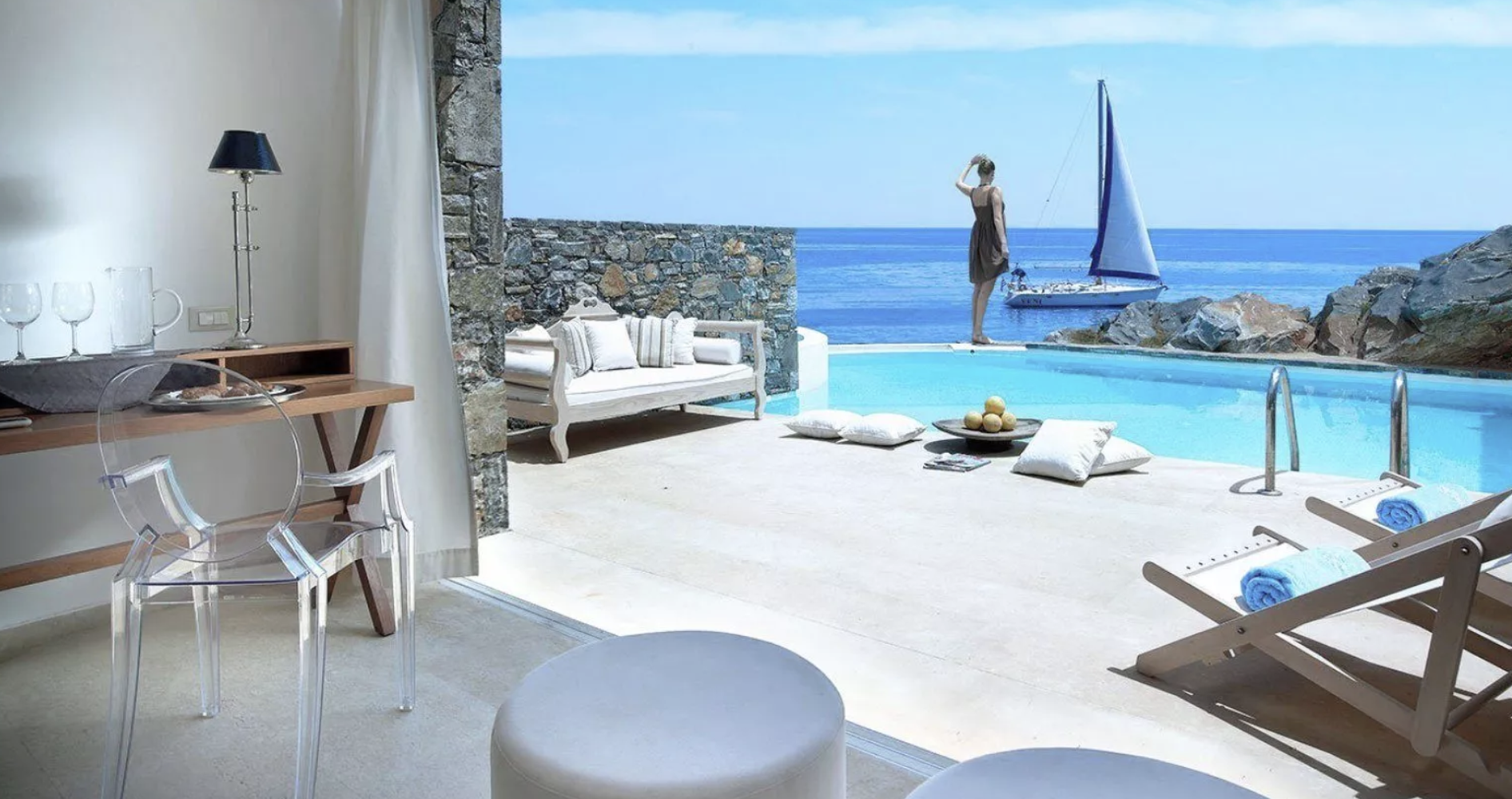
Crete feels expansive but grounded.
In Elounda, properties like St. Nicolas Bay Resort Hotel & Villas sit directly along Mirabello Bay, where private terraces open to uninterrupted blue and the rhythm of the sea sets the pace for the day. The hotel is low-slung and spread along the water, with pathways that lead gradually from room to shoreline, creating a sense of quiet seclusion.
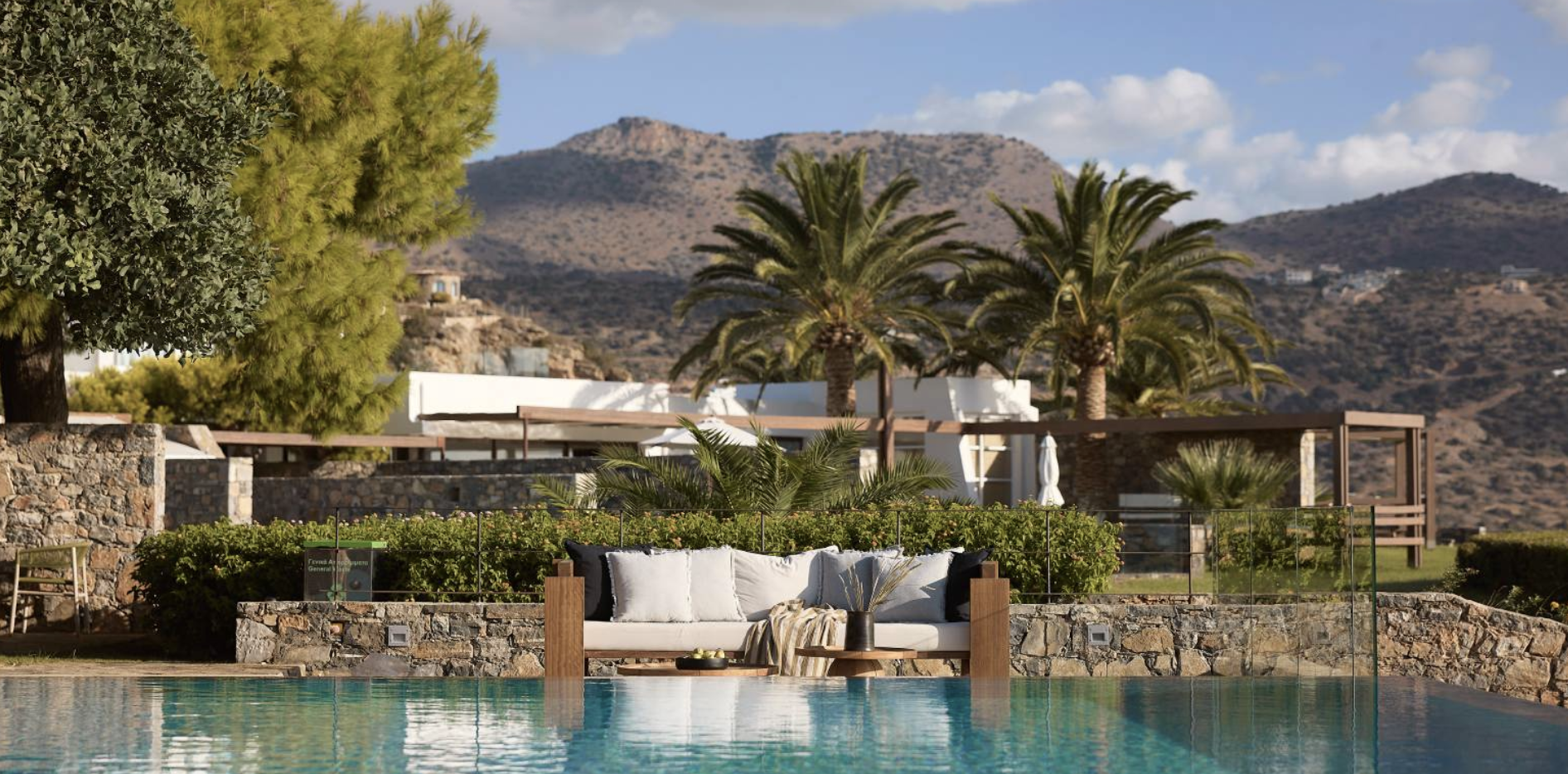
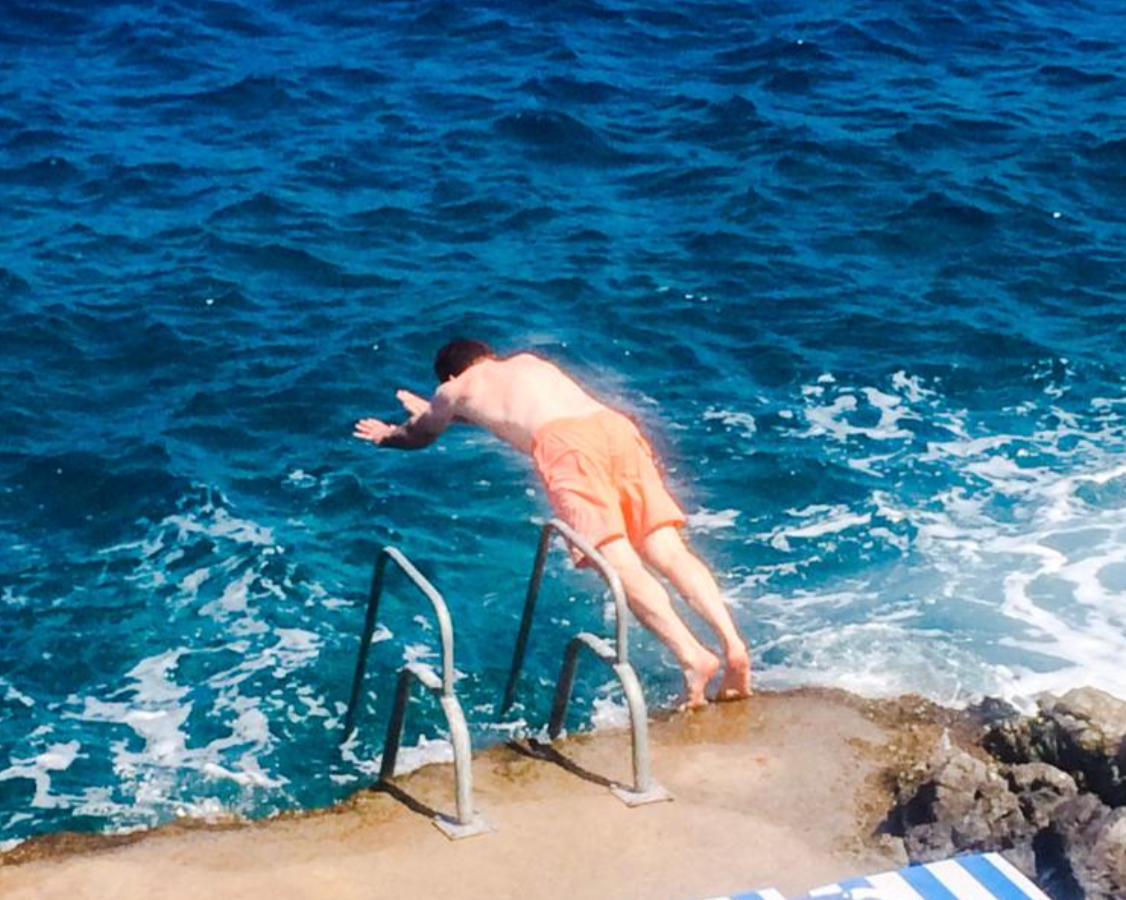
We stayed in a private villa with its own pool and direct access to the water — a rare kind of setup where the line between hotel and home begins to blur. Just below us, a small private dock made it possible to slip directly into the bay, turning even a quick swim into something memorable.
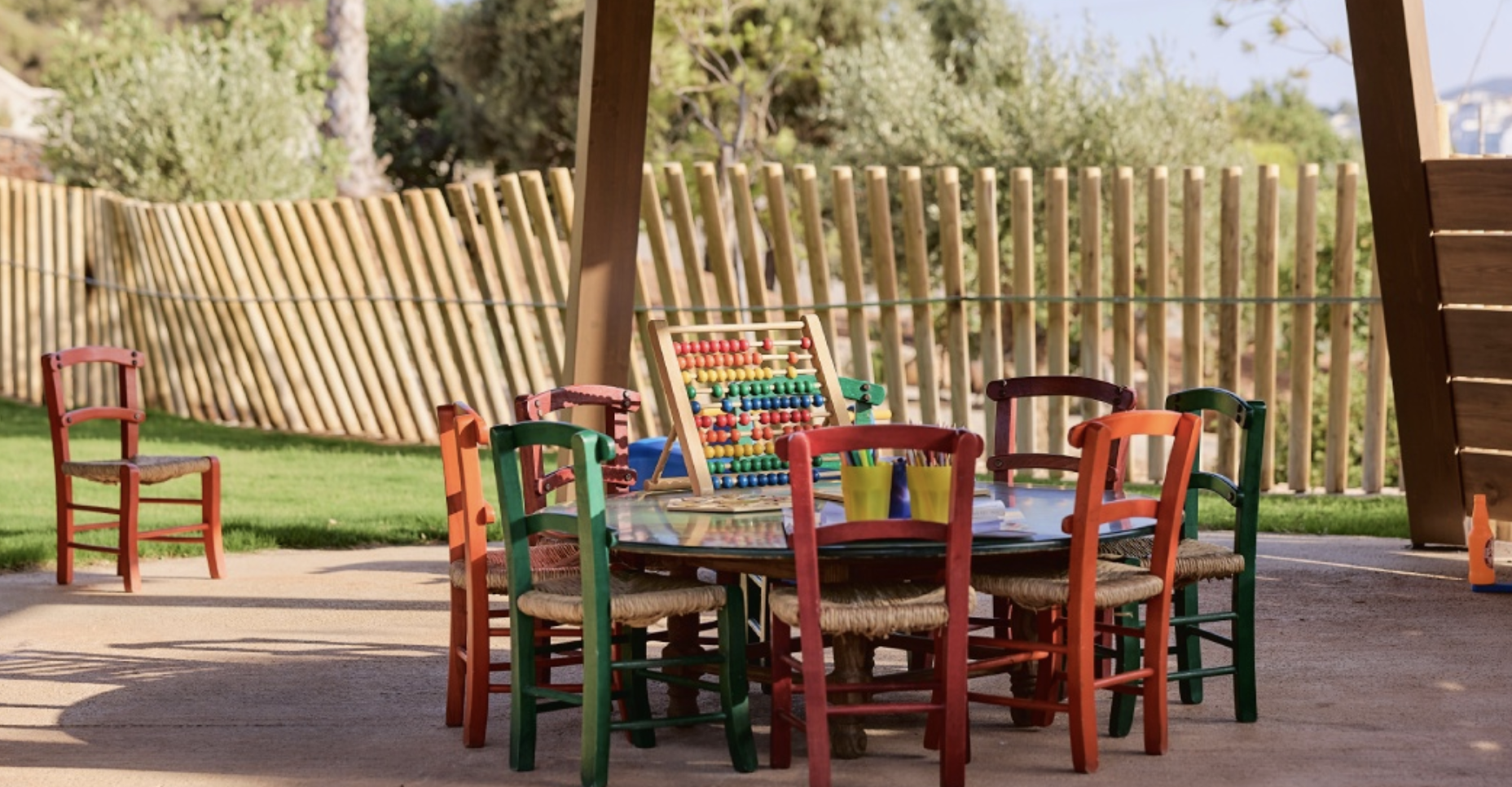
Suites and villas offer a balance of space and privacy, making it easy to settle in as a family while still allowing for quieter moments as a couple. It’s the kind of place where the day slows naturally — where you don’t feel the need to leave, and where even small moments feel elevated.
Evenings arrive gently. The air cools, the sea darkens, and the sound of water replaces conversation.
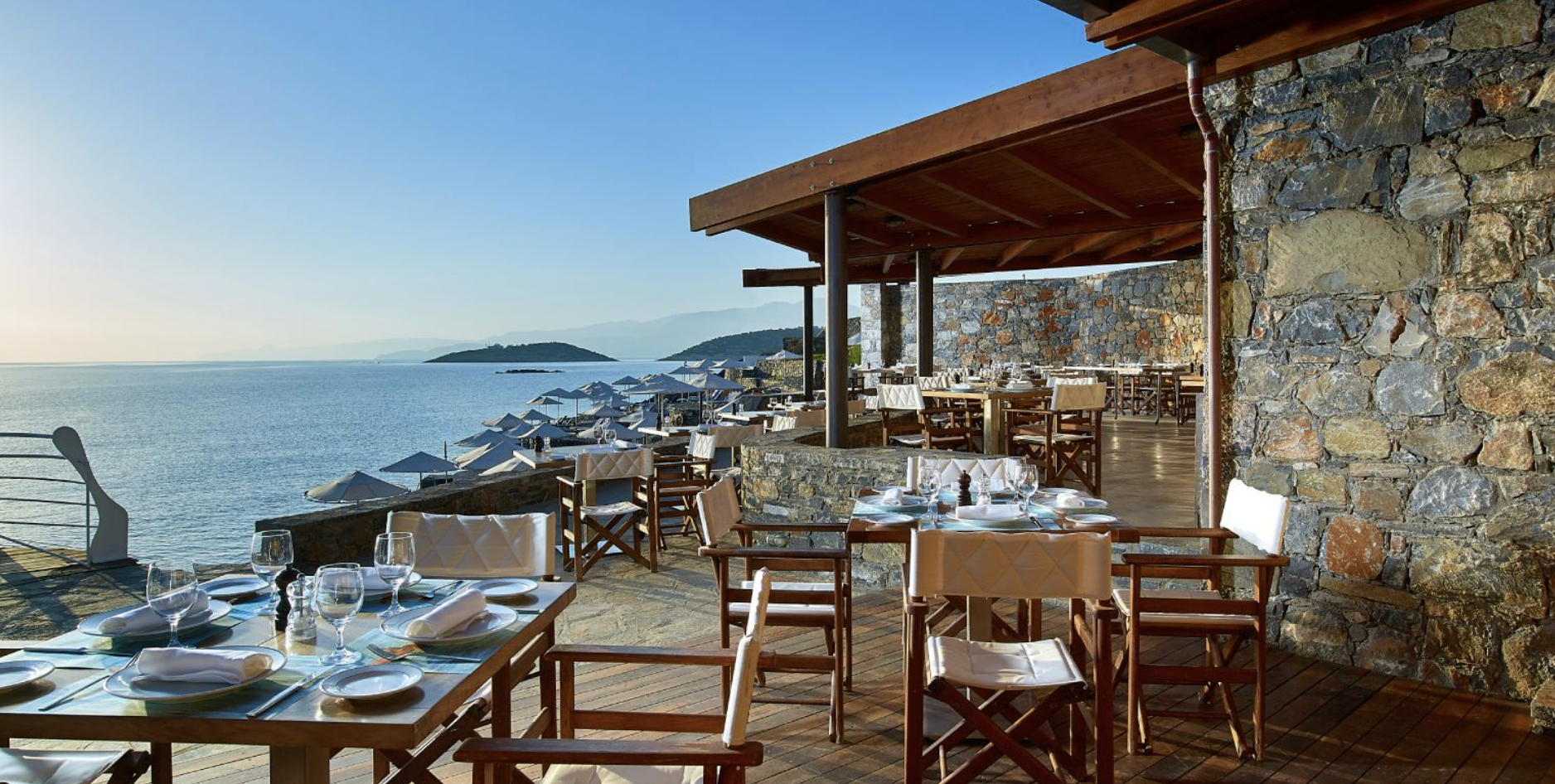
Days revolve around simple pleasures — grilled seafood, local olive oil, crisp white wines indigenous to the island. Meals stretch. Laughter lingers. Children drift back from the shoreline sun-warmed and tired, leaving parents to claim the last of the light.
Before leaving, we wandered into the hotel’s small boutique and found a painting of children playing in the water — so reminiscent of our own that we brought it home with us, a quiet reminder of the trip.
.