Marrakech and Fes — Romance Within the Medina Walls
Morocco for Two
Morocco heightens everything.
Color feels more saturated. Music lingers longer in the air. Even the act of walking becomes theatrical — the Medina unfolding in narrow passages, tiled courtyards hidden behind carved wooden doors, the scent of orange blossom and spice drifting through warm dusk.
Marrakesh is not subtle. It hums. It dazzles. And yet, within that intensity, it offers intimacy.
For couples traveling together — even with children woven into the rhythm of the days — Morocco invites a different kind of connection. One rooted in contrast: chaos and quiet, heat and cool stone, spectacle and stillness.
Inside the Medina
At first glance, Marrakesh can feel overwhelming. The Medina pulses with motion — motorbikes weaving through alleyways, merchants arranging ceramics in improbable stacks, the call to prayer echoing overhead.
But step inside a riad and the world changes.
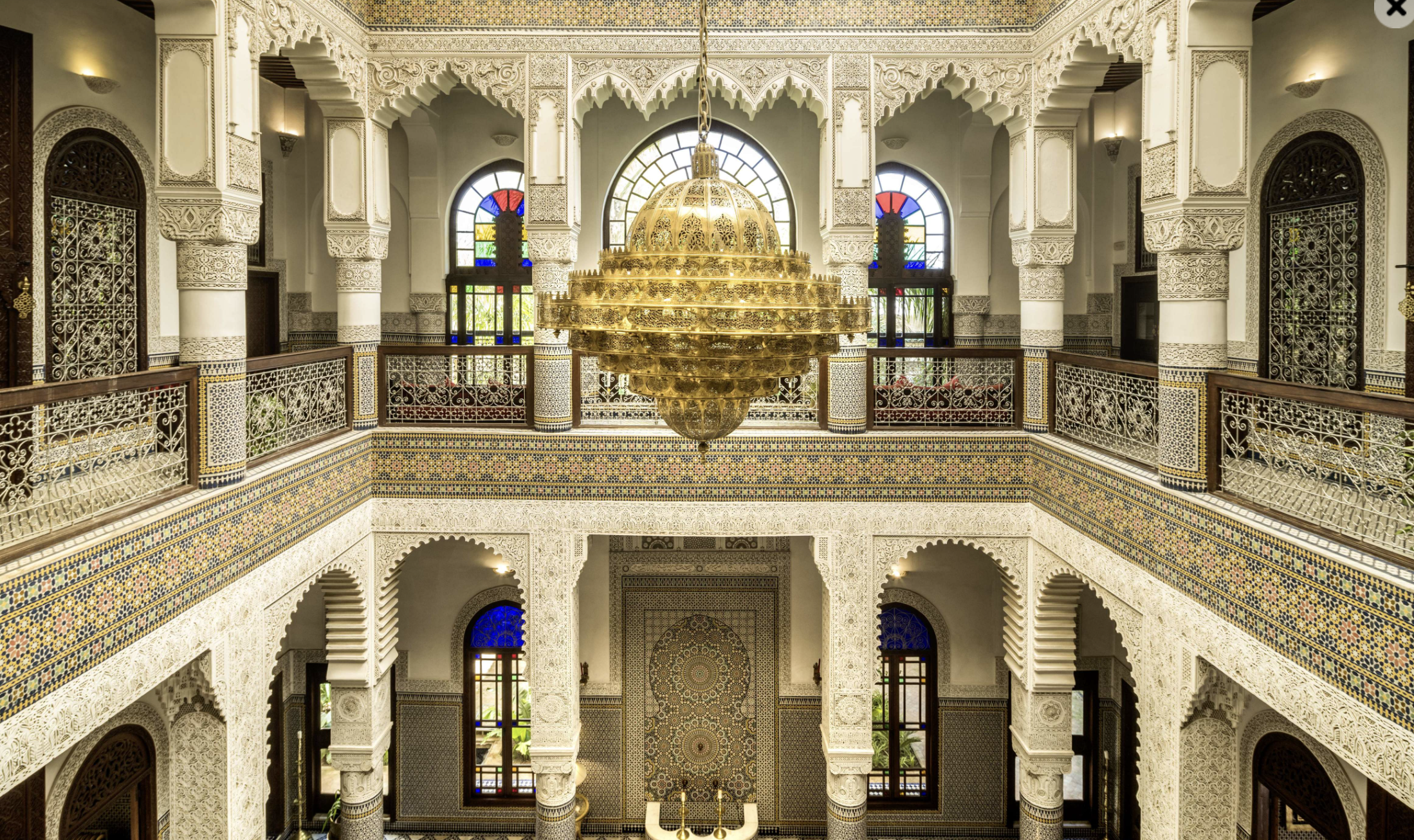
At the Royal Mansour, commissioned by King Mohammed VI, privacy becomes architectural. Each guest stays inside a private riad rather than a traditional hotel room — multi-level sanctuaries with hidden courtyards, carved plasterwork, and rooftop terraces that feel suspended above the city.
There is something undeniably romantic about a place designed for discretion. Breakfast arrives quietly. Tea is poured with ceremony. The outside world fades into patterned tile and filtered light.
For families, this layout offers an unexpected gift: separation without distance. Children can rest downstairs while parents linger on a terrace above. Travel does not have to mean constant proximity; it can mean curated space.
Rituals of the Day
Mornings in Marrakesh begin slowly.
At Le Jardin within the Royal Mansour, tea is poured theatrically from silver pots held high above delicate glasses. Moroccan breakfasts stretch across the table — fresh breads, honey, olives, preserved lemons, eggs scented with cumin. It is less about indulgence and more about ceremony.
Outside the walls of the city, the landscape shifts quickly.
In the Palmeraie, camels move deliberately through dusty groves, the horizon flat and endless. It’s easy to dismiss the ritual as tourist-driven, but there is something grounding about the pace — the sway, the silence, the vastness beyond the city’s hum.
Traveling as a family often means shared novelty. In Morocco, even simple activities feel cinematic enough to be remembered long after.
Evenings in Marrakesh
As dusk settles, Marrakesh softens.
Lanterns glow. Courtyards fill with low music. Restaurants become stage sets.
At La Grande Table Marocaine, traditional Moroccan cuisine is elevated without losing its depth. Tagines arrive fragrant and layered; couscous is delicate rather than heavy. Meals here are not rushed. They unfold.
Elsewhere, smaller dining rooms feel more intimate. Candlelight, tiled floors, carved ceilings — Morocco understands atmosphere instinctively.
Even for couples traveling with children, evenings offer reprieve. A shared dessert. A glass of wine. The luxury of conversation uninterrupted by daylight demands.
Fes: A Different Tempo
From Marrakesh, the road to Fes winds north through landscape that feels both cinematic and remote.
Fes is quieter, more inward-facing. Its Medina is labyrinthine and ancient, intimidating at first but mesmerizing once inside.
At Riad Fes, a Relais & Châteaux property tucked within the walls, velvet textures and tiled courtyards create a mood that feels almost operatic. Rooftop views stretch across the old city. The pace slows.
The most memorable ritual here was a couples’ hammam at Palais Faraj — steam, water, rhythmic motion, the feeling of emerging both grounded and weightless. Morocco has a way of turning ordinary experiences into shared rites.
Later, dinner beneath the stars on a rooftop terrace felt almost unnecessary to describe. The city shimmered below. The call to prayer drifted across rooftops. There are moments when travel feels less like movement and more like immersion.
Morocco offers many of them.